
For a high school senior, few pieces of clothing carry the meaning of a Letterman’s jacket. It is more than a jacket. It is a physical record of achievement, a symbol of commitment, and a piece of school history that can remain meaningful long after the final game, final meet, or final school bell. The varsity letter represents the achievement; the jacket gives that achievement a place to live. For seniors, especially, the Letterman’s jacket becomes part of the story they take with them when they graduate. It can represent the sports they played, the number they wore, the school they represented, the championships they helped win, and the people and experiences that shaped their high school career.
That is why waiting until the last minute to order a senior Letterman’s jacket can be a mistake. Custom jackets require more than simply placing an order. The process can include selecting the jacket, confirming school colors, determining sizing, creating artwork, approving the design, producing chenille letters and patches, embroidering names and numbers, assembling the jacket, inspecting the finished product, and shipping it to the school or athlete. Industry lead times vary considerably depending on the manufacturer and level of customization. Some providers advertise production in approximately three to six weeks, while others recommend eight to ten weeks or more for fully customized Letterman’s jackets. During peak ordering periods, lead times can increase.
For a senior class with a November Letterman’s or athletic banquet, the safest approach is to work backward from the event rather than forward from the date students begin asking about jackets. If the jackets need to be presented at a November banquet, the design and ordering process should ideally begin during the summer or very early in the fall. That provides enough time to establish the school-approved design, gather student information, conduct sizing, collect names and graduation years, verify sport and achievement patches, approve artwork, and place the production order. A reasonable planning target is to have the student roster, sizes, personalization, artwork, and deposit or purchase order finalized approximately 10–12 weeks before the banquet, with additional contingency time whenever possible. This buffer is important because even manufacturers advertising shorter production times recommend allowing additional time for design revisions, customization, and delivery.
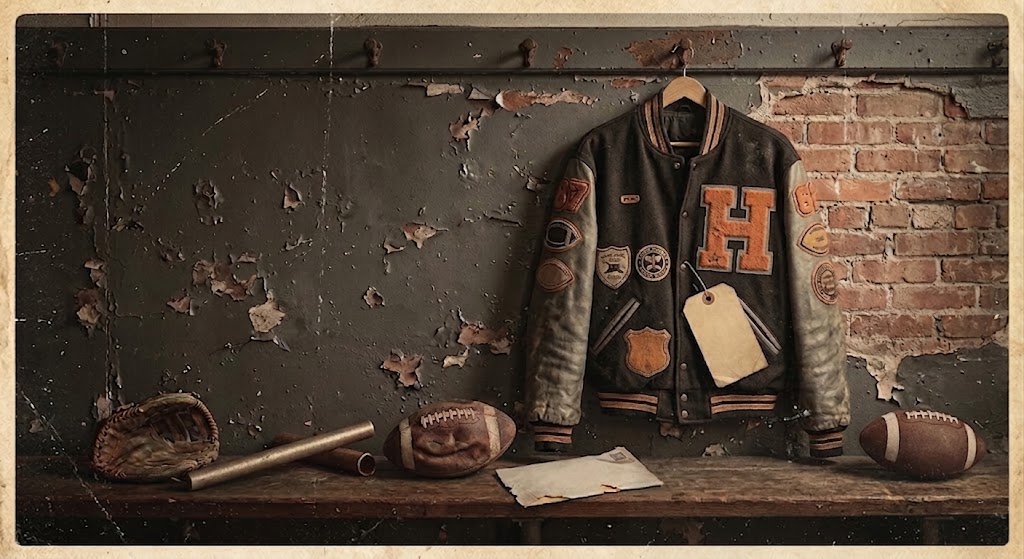
The decoration process is particularly important because the jacket is ultimately a personalized piece of athletic history. The foundation begins with the jacket itself: the body color, sleeve material, trim, snaps, and overall style should reflect the school’s identity. The traditional Letterman’s jacket may feature a wool or wool-like body with leather sleeves, while modern programs can choose from alternative materials and contemporary silhouettes. Once the base jacket is selected, the varsity letter is positioned, followed by the student’s name, graduation year, jersey number, sport designation, mascot, championship recognition, academic honors, or other approved achievements. Chenille letters and patches are then applied, while embroidery may be used for names, numbers, logos, or additional recognition. Some manufacturers provide a digital proof before production, allowing the school or program coordinator to verify the placement and appearance of each element before the jacket is manufactured.
For that reason, sizing should happen early. A Letterman’s jacket is not something students should purchase based solely on the size of a T-shirt or hoodie. Students should have the opportunity to try on sample jackets and determine the appropriate fit before personalization begins. This is especially important because a custom jacket is substantially more difficult to correct once names, letters, embroidery, and patches have been applied. Some Letterman’s jacket providers specifically recommend trying on a sample before the jacket is lettered, while school programs commonly establish designated sizing periods before submitting the final order.
The November banquet also creates an important distinction between ordering a jacket and owning a Letterman’s jacket. The objective should not simply be to get a jacket delivered before an event. The objective is to create something worthy of the athlete’s accomplishments. A senior’s jacket should tell a story. The letter identifies the achievement, the graduation year identifies the moment in time, and the patches and personalization document the experiences that made the athlete’s high school career unique. Years later, the jacket can become something that connects the graduate to teammates, coaches, teachers, family, and a particular chapter of life that cannot be recreated.
There is also a psychological component to wearing the jacket. Recognition matters to athletes. Young people spend countless hours practicing, competing, traveling, recovering, studying, and sacrificing in pursuit of improvement. A Letterman’s jacket provides a visible acknowledgment that those efforts mattered. It allows an athlete to wear an accomplishment rather than simply remember it. For younger students, seeing seniors wearing their jackets can also establish a culture of achievement: the jacket becomes something to aspire to, not merely something to purchase. It communicates that commitment to the program is recognized and that excellence has a visible place within the school’s culture.
For seniors, however, the significance is even greater. The final year of high school represents a transition between two worlds. The athlete is no longer simply participating in a program; they are becoming part of its history. Owning a Letterman’s jacket gives that history a physical form. It can be worn at games, alumni events, reunions, community gatherings, and eventually passed down as a keepsake. In a world where so much of our lives exists digitally, there is something powerful about possessing an object that carries the evidence of what you accomplished.
The key is timing. A November banquet should not be the date when the Letterman’s jacket process begins; it should be the date when the finished product is celebrated. Schools and athletic programs that want to make the experience memorable should begin with the banquet date and work backward: establish the design, confirm the vendor, conduct sizing, collect student information, approve artwork, place the order, allow for production and shipping, inspect the jackets, and reserve time for corrections before presentation. Depending on the manufacturer, customization, and seasonal workload, allowing roughly 10–12 weeks—or more for complex orders—is a prudent planning window.
Ultimately, the Letterman’s jacket is not simply athletic apparel. It is a wearable archive of achievement. Every letter, patch, number, name, and year represents a story. For a senior athlete, it can become one of the few physical reminders of the people, places, victories, disappointments, and sacrifices that defined an important period of life. That is why the jacket deserves the same attention to detail that athletes gave their sport. Don’t wait until the banquet is approaching to think about the jacket. Start early, build it intentionally, and make sure that when the senior walks across the room wearing it, the jacket says exactly what it should: I earned this. I was here. This is part of my legacy.
RUN Journal — Where Sport, Culture, and the Business of Sport Meet.