

Core strength gets talked about a lot, but it’s often misunderstood. It’s not just about visible abs—it’s about the entire system that stabilizes your body and allows you to move with power, control, and efficiency.
At its foundation, your core includes the muscles of your abdomen, lower back, hips, and pelvis. These muscles work together to support your spine and transfer force between your upper and lower body. Whether you’re sprinting down the court, changing direction, or simply standing upright, your core is constantly engaged.
One of the biggest benefits of strong core muscles is improved athletic performance. In sports, power doesn’t just come from your legs or arms—it’s generated through your core and distributed outward. A basketball player exploding into a drive, elevating for a rebound, or absorbing contact in the paint relies heavily on core stability. Without it, energy leaks occur, reducing strength, speed, and overall effectiveness.
Core strength is also critical for balance and coordination. A stable core allows you to control your body in motion, especially during unpredictable movements. This becomes essential in sports environments where quick reactions and body control can be the difference between success and failure.
Injury prevention is another major advantage. A weak core places additional stress on other parts of the body, particularly the lower back, knees, and hips. Over time, this can lead to poor movement patterns and increased risk of injury. Strengthening the core helps maintain proper alignment and reduces unnecessary strain, keeping athletes healthier and more durable.
Beyond athletics, core strength improves everyday function. From lifting objects to maintaining posture during long hours of sitting, a strong core supports better movement and reduces fatigue. It also contributes to long-term spinal health, which becomes increasingly important over time.
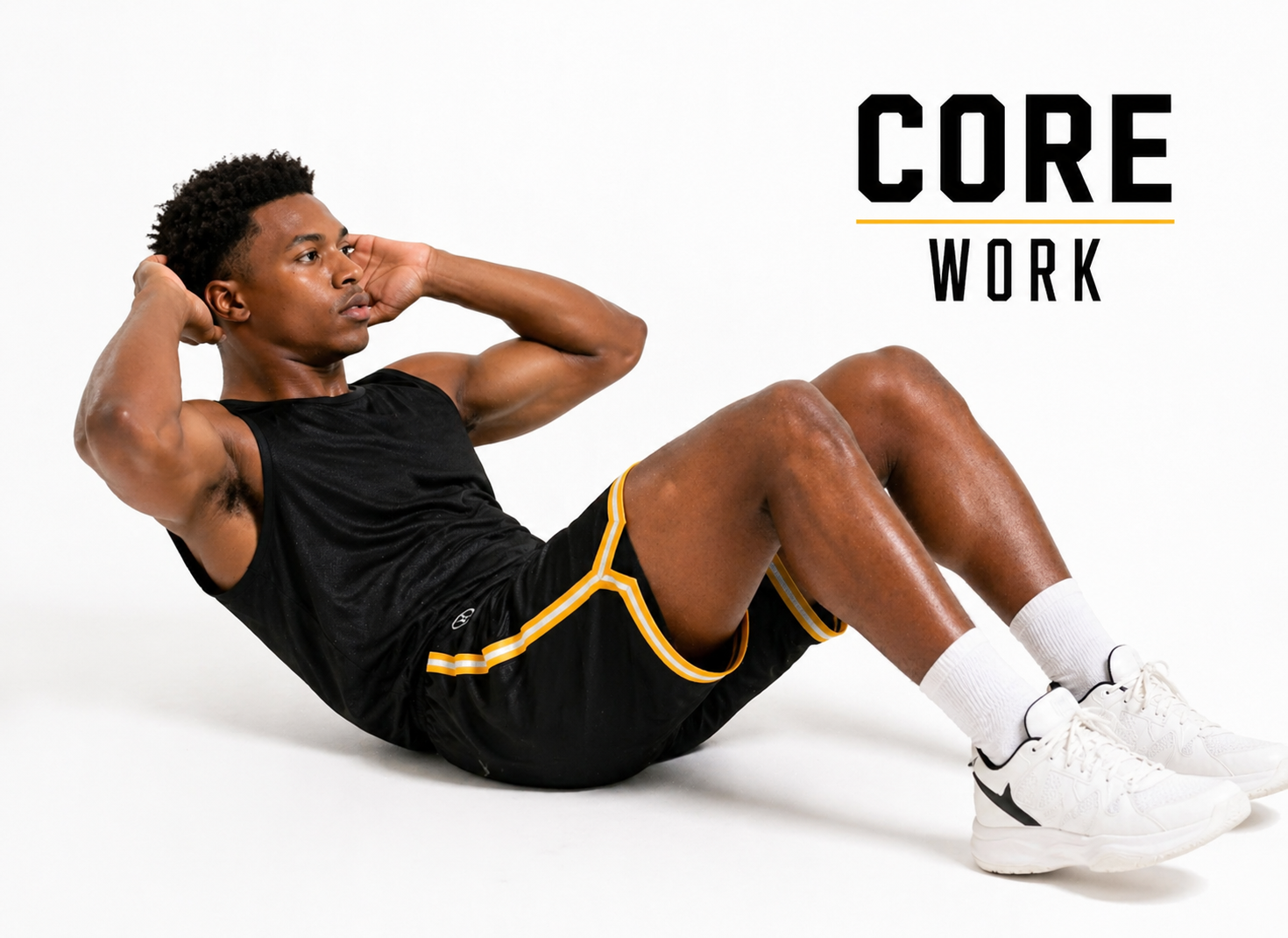
Building core strength doesn’t require complicated routines. Exercises like planks, dead bugs, Russian twists, and controlled rotational movements can be highly effective when done consistently and with proper form. The key is focusing on stability, control, and quality of movement rather than just repetition.
In the end, core strength is the foundation of movement. It connects everything you do—on the court, in the gym, and in everyday life. Strengthen your core, and you strengthen your ability to perform, protect, and progress.